AI Agent Governance: The Operating Model Business Leaders Need
AI agents are moving from demos into production. Learn the governance model needed to control access, risk, ownership, and measurable business value.
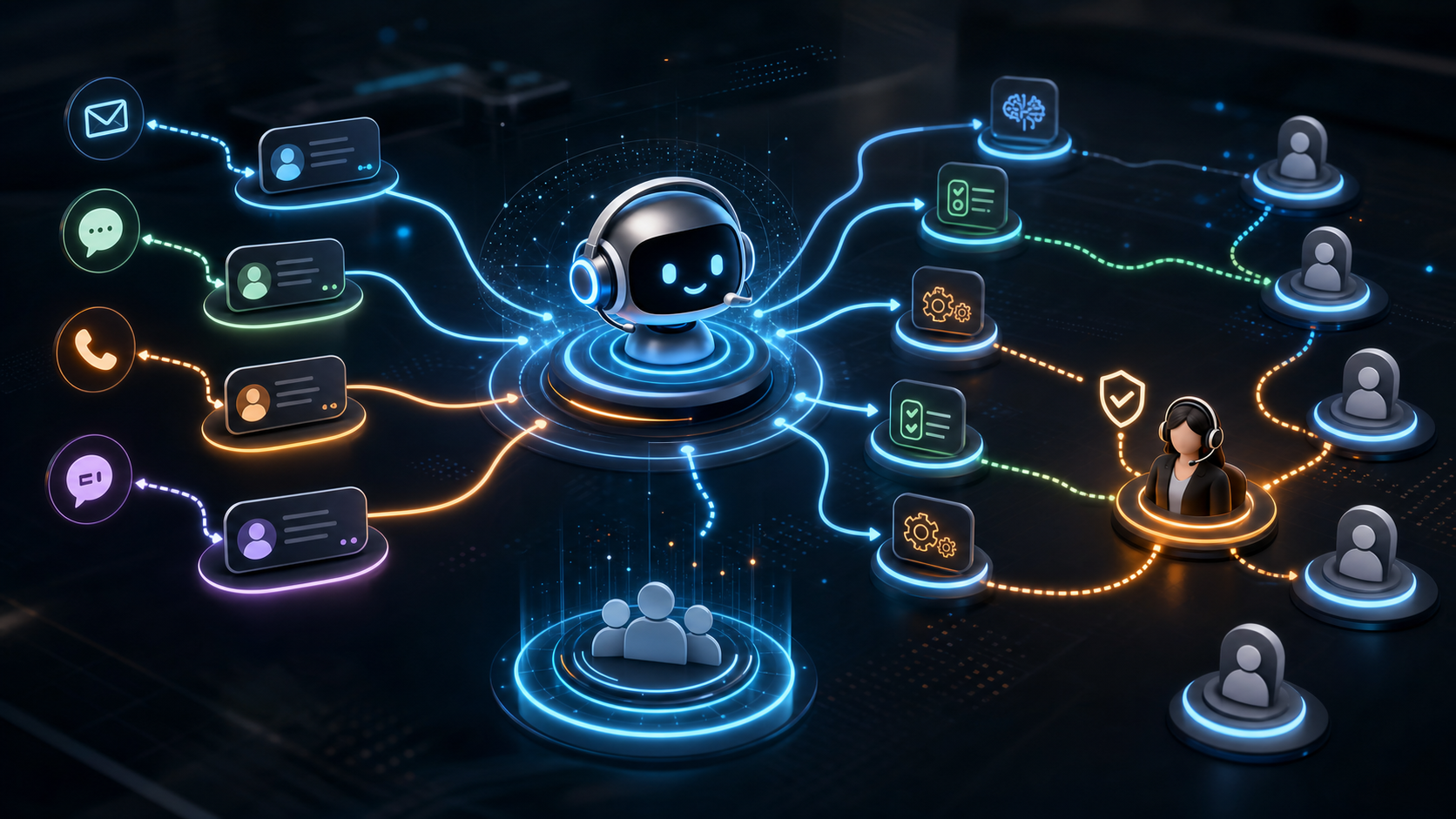
AI agents are becoming one of the most urgent enterprise AI topics of 2026. The reason is simple: unlike a chatbot that mainly answers questions, an agent can plan, call tools, retrieve data, update records, trigger workflows, and hand work to other systems. That makes agents useful, but it also makes them harder to govern.
Recent reporting on agentic AI points to a clear pattern: companies are interested in agents, but many are not ready to manage them safely at scale. TechRadar reported concerns around guardrails, shadow AI, data exposure, and unclear ownership. Academic work on governance by design makes the same point from a systems perspective: governance has to be built into architecture, tool permissions, memory, improvement cycles, and human review.
For business leaders, this means agent governance is not just a compliance topic. It is the operating model that determines whether agents create reliable business value.
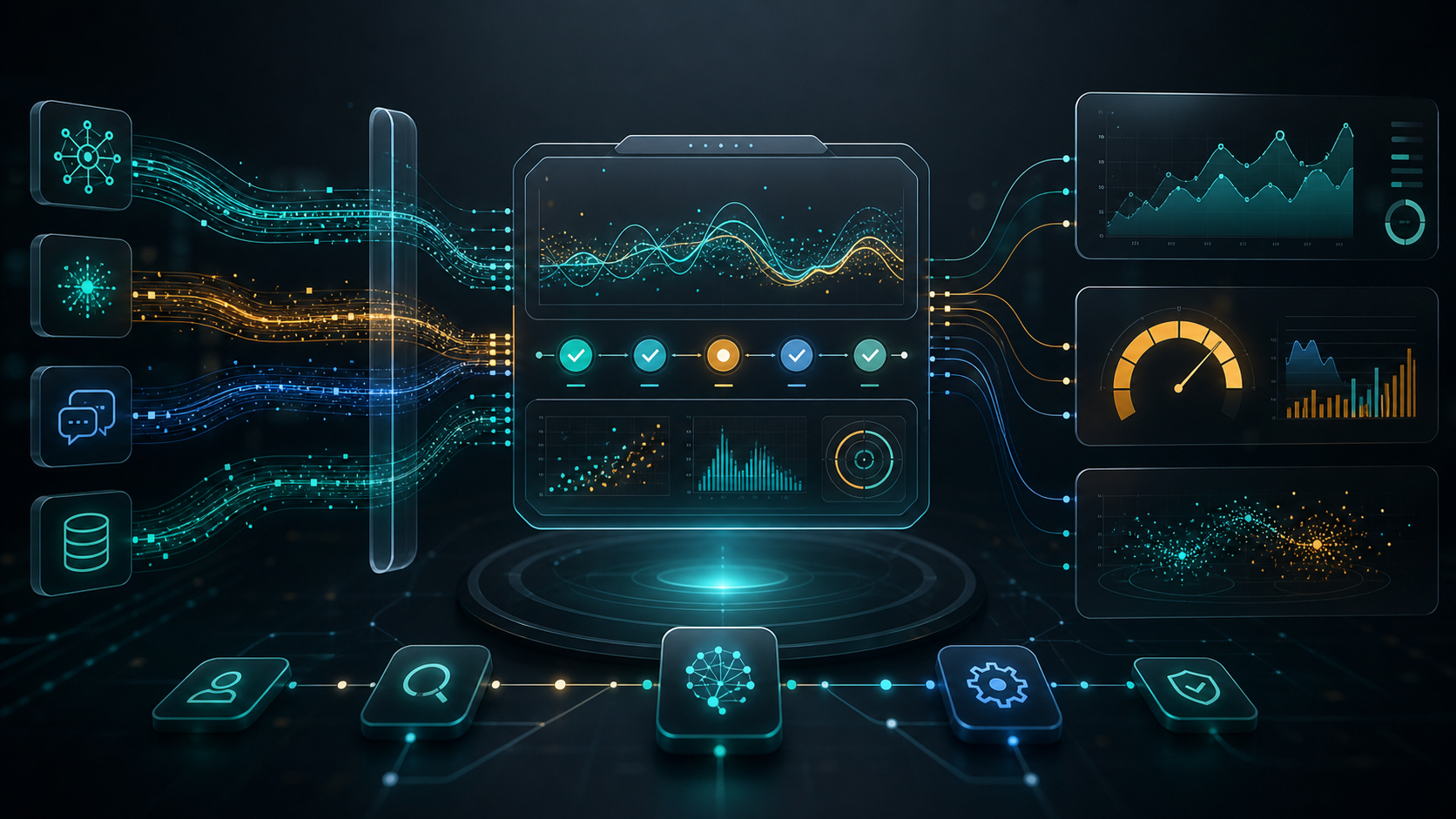
Governance also needs technical evidence. Pair this operating model with loop engineering for workflow design and AI observability for traces, evals, cost, and drift monitoring.
Start With the Work, Not the Agent
The first mistake is asking, “Where can we deploy agents?” The better question is, “Which workflow has enough repeatability, context, and measurable value to justify automation?”
Good candidate workflows usually have:
- high volume
- clear input and output patterns
- repetitive decisions
- documented escalation rules
- measurable cost, speed, or quality targets
- limited downside if the first version requires human approval
Examples include support triage, internal knowledge retrieval, sales follow-up preparation, invoice exception handling, compliance evidence gathering, and operations reporting. These are not glamorous use cases, but they are easier to control than open-ended agents with broad system access.
Define Agent Boundaries
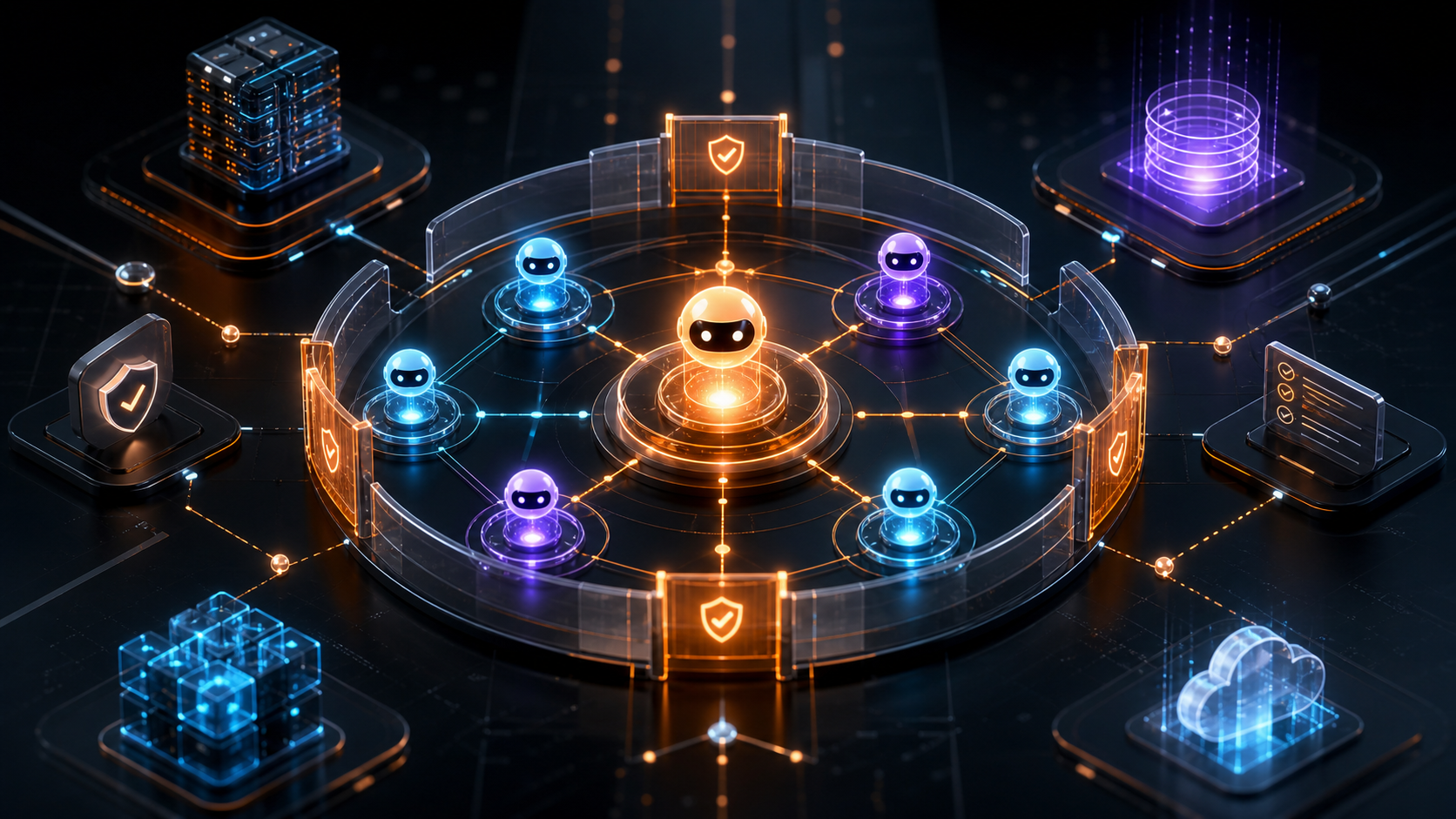
Every production agent needs boundaries. These should be explicit, documented, and enforced technically.
At minimum, define:
- what the agent is allowed to read
- what the agent is allowed to write
- which tools it can call
- when it needs human approval
- what data it must never access
- how long it can retain memory
- what logs must be stored
- who owns failures
Without these boundaries, agents become invisible process owners. That is dangerous because business teams may assume automation is working while no one is accountable for drift, bad outputs, or tool misuse.
Use Permission Tiers
Not every agent should have the same autonomy. A practical governance model has tiers.
Tier 1: Advisory agents
These agents read information and produce recommendations. They do not update systems. This is the safest starting point.
Tier 2: Drafting agents
These agents prepare emails, reports, tickets, summaries, or records, but a person approves the final action.
Tier 3: Controlled execution agents
These agents can take specific actions within a narrow workflow, such as updating a ticket status or creating a task, but only inside defined limits.
Tier 4: Autonomous workflow agents
These agents execute multi-step workflows with limited direct supervision. They need the strongest monitoring, logging, rollback, and ownership model.
Most organizations should spend more time in tiers 1 and 2 than they expect. The goal is not to limit ambition. The goal is to build trust before expanding autonomy.
Measure the Right Things
Agent success is not measured by how impressive a demo looks. It is measured by whether the workflow improves.
Useful metrics include:
- time saved per case
- reduction in manual handoffs
- accuracy of completed tasks
- escalation rate
- user acceptance rate
- cost per completed workflow
- rework rate
- policy violation rate
- customer or employee satisfaction
These metrics should be visible before and after deployment. If a team cannot measure the workflow today, it will struggle to prove agent ROI later.
Build Observability Early
Agent failures are often process failures, not just model failures. An agent may retrieve stale context, choose the wrong tool, skip an edge case, or trigger a downstream workflow at the wrong time.
Observability should capture:
- input context
- retrieved sources
- tool calls
- intermediate decisions
- final output
- human overrides
- failure categories
- cost and latency
Research on continuous AI observability, such as the AI Trust OS paper, argues that organizations cannot govern AI systems they cannot see. That is especially true for agents because their work happens across multiple systems.
Create a Human Review Pattern
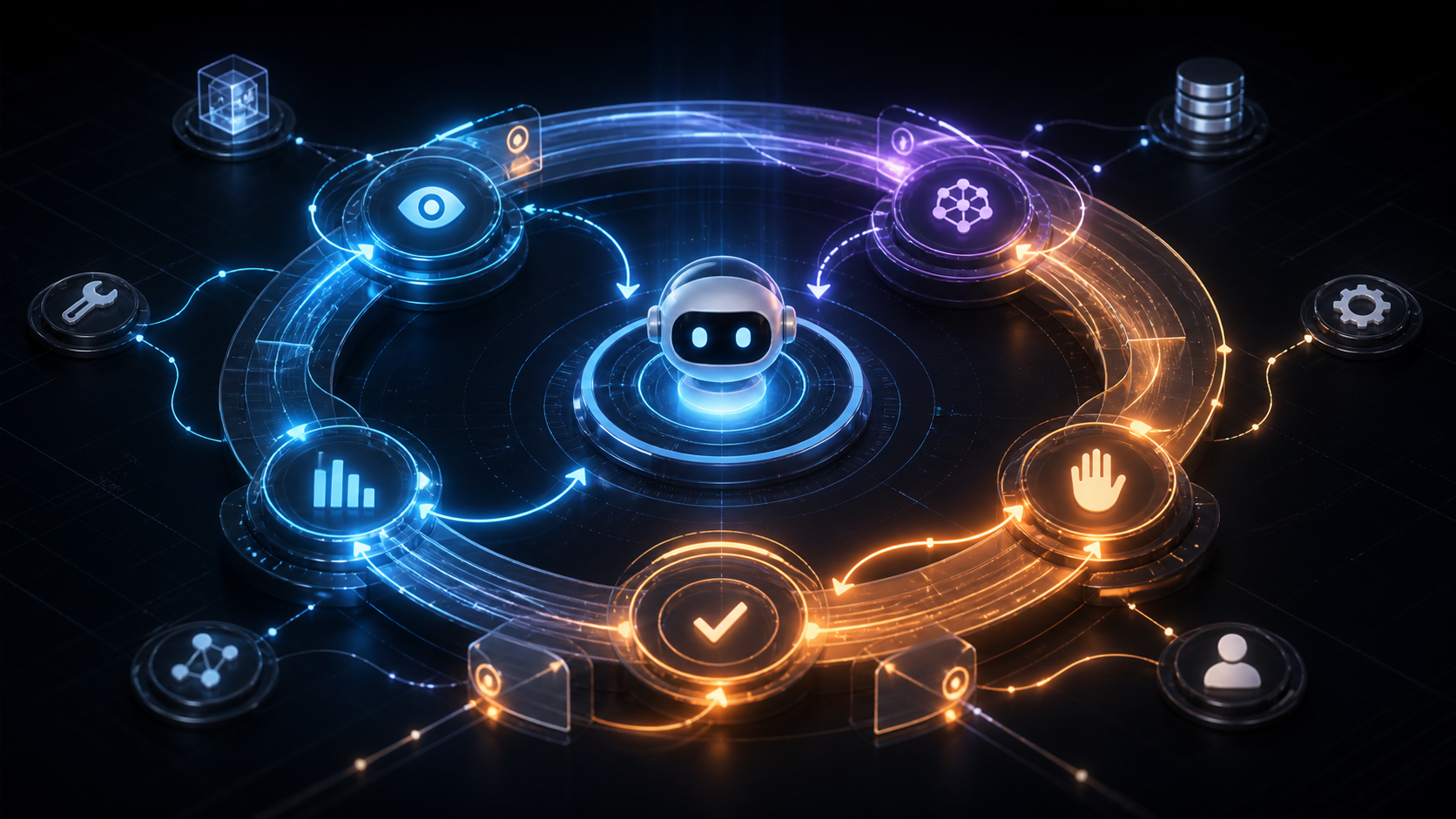
Human oversight should not mean “someone checks everything forever.” That does not scale. Instead, review should be risk-based.
Use human review for:
- first deployment phases
- high-value transactions
- regulated decisions
- unusual confidence patterns
- new workflow branches
- customer-facing messages
- actions that cannot be easily reversed
Over time, review can shift from every case to sampled cases and exception cases. The important point is that the review pattern is designed, not improvised.
Avoid Agent Sprawl
As agent tools become easier to build, teams may create many small agents without shared standards. This creates duplicated work, inconsistent outputs, and security risk.
Prevent sprawl by creating a lightweight agent registry. Track:
- agent name
- owner
- workflow
- systems accessed
- data classification
- autonomy tier
- review requirements
- active status
- last evaluation date
This does not need to be bureaucratic. A simple registry is enough to answer the question, “What agents are running in our business, and who owns them?”
How ModelShifts Can Help
ModelShifts helps companies design practical AI agent operating models before building production systems. That includes workflow selection, governance design, permission models, evaluation plans, and team training.
If your organization is exploring agents, contact us to map the safest path from pilot to production.